
Creative Writing Week 12: Voices in the Music — Writing Characters Through Song Lyrics
Opening Freewrite: Drop the Needle
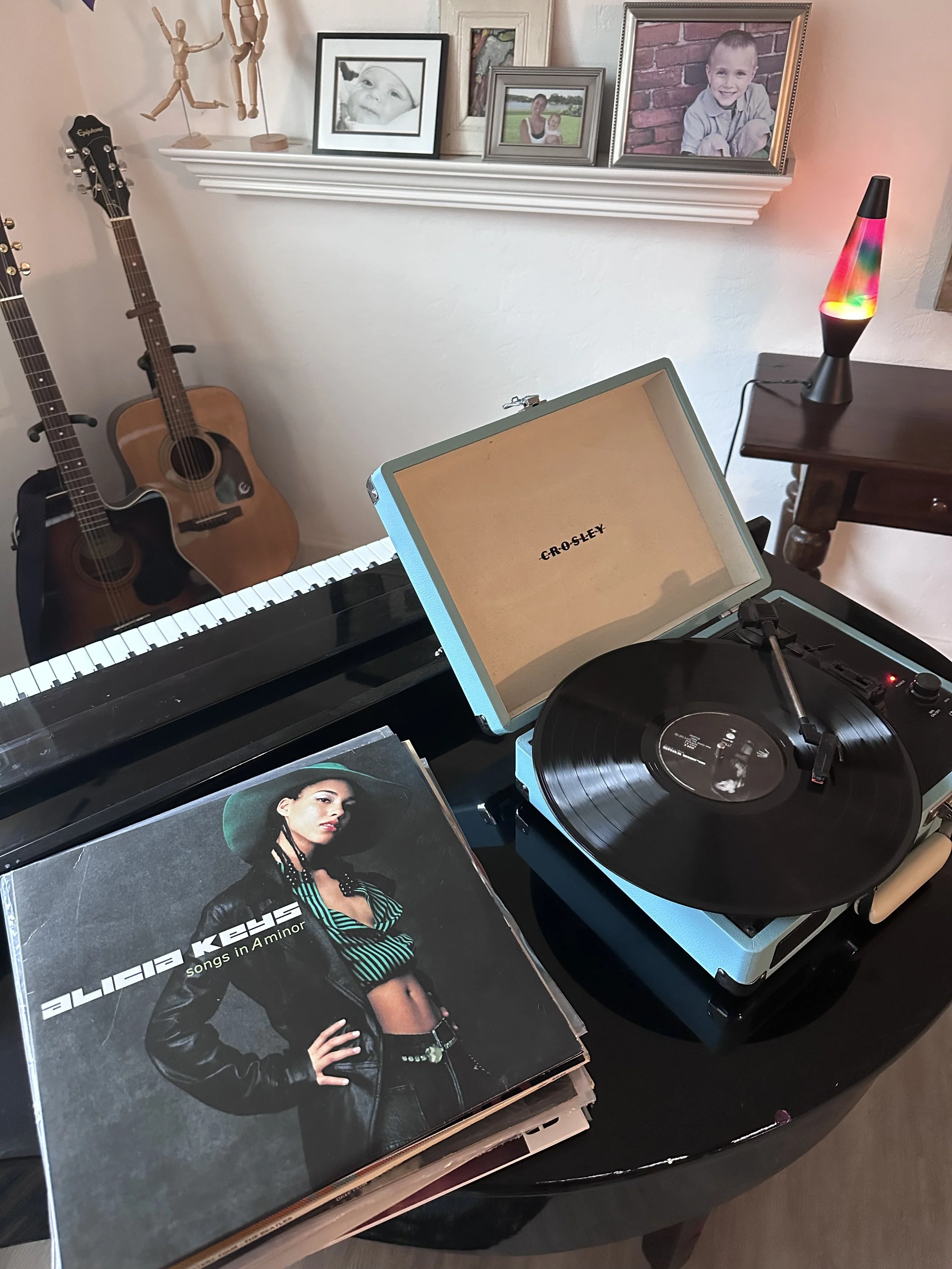
We begin with a listening exercise using short clips from a variety of genres on the record player. Without overthinking, students freewrite based on the sounds they hear. Each clip becomes its own doorway into a feeling, setting, or mood. The goal is to translate music into imagery and emotional tone. Students might write about a character who walks into the music, a scene suggested by the rhythm, or simply the colors and textures the sound evokes. This loosens up the imagination and helps them practice connecting sensory experience to story.
Mini-Lesson: How Songs Shape Narrative
Today’s lesson explores the ways music can function as storytelling. Students examine how both lyrics and sound communicate emotion, character, and perspective—and how those tools can be borrowed for their own writing.
1. Lyrics as Storytelling
We begin by looking at lyrics as a compact narrative form. Songwriters tell stories with extreme efficiency: a single metaphor can suggest a whole relationship, and a repeated line can signal emotional urgency or conflict.
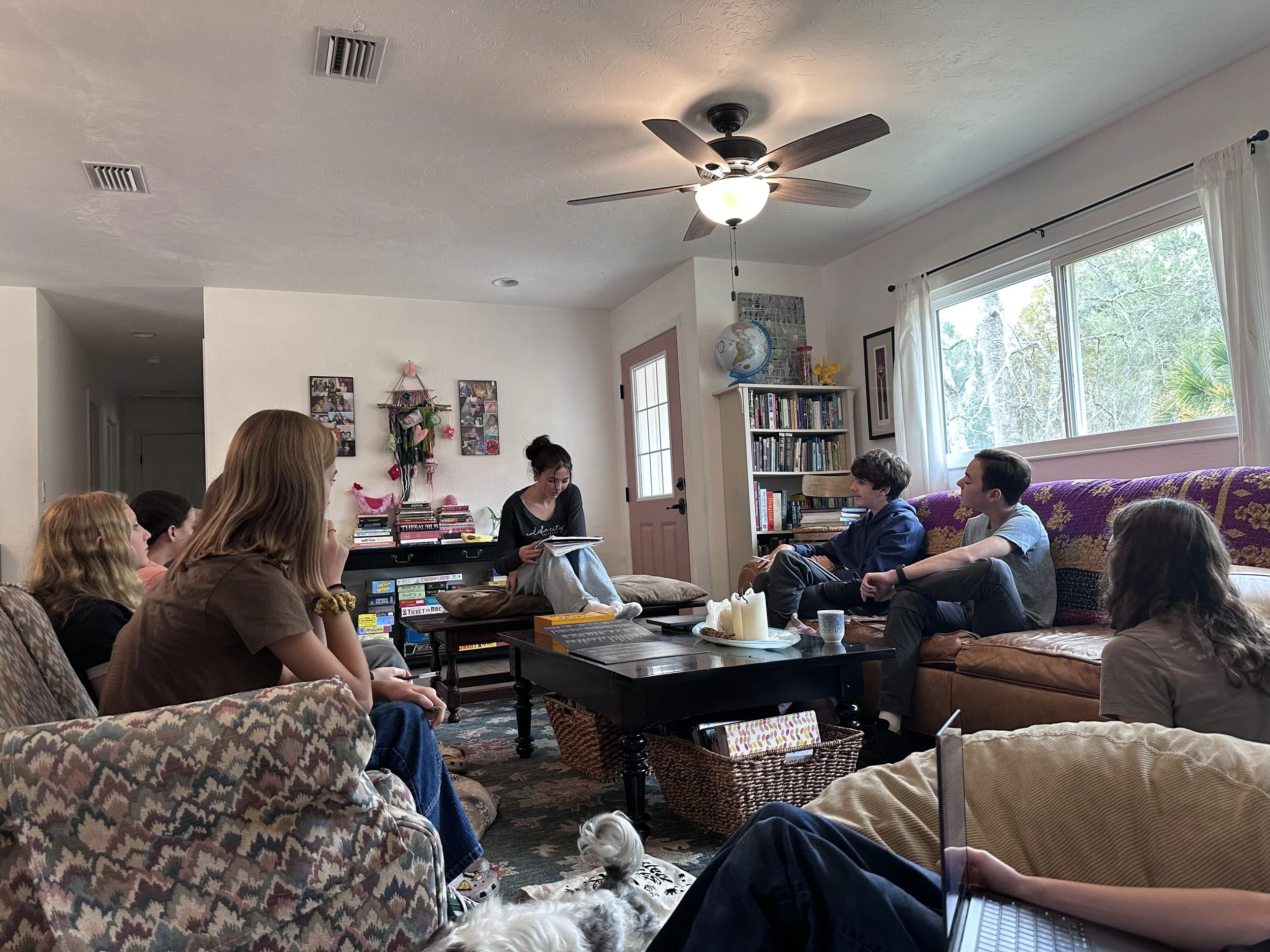
Each person looks up song lyrics from a song they know and look for:
Point of view: Who is speaking, and to whom?
Implied backstory: What happened before the first verse even begins?
Key images: What pictures does the song place in the listener’s mind?
Emotional stakes: What does the singer want, fear, regret, or hope for?
We emphasize that even simple lyrics carry layers of meaning when treated as character clues.
2. Sound as Emotional Architecture
Next, students shift their attention from lyrics to the music itself. Sound can act as a map for emotion.
We explore how musical elements suggest inner states:
Tempo: Fast can feel urgent, chaotic, or youthful; slow can feel heavy, longing, or contemplative.
Instrumentation: A stripped-down acoustic guitar creates a different mood than a full orchestral swell.
Key and tone: Major keys often feel open or hopeful; minor keys can feel shadowed or tense.
Repetition and rhythm: A pulsing beat might mimic a heartbeat, footsteps, or a rising sense of determination.
Students note how they respond physically and emotionally to each example—music is a shortcut to mood.
3. How Writers Echo Songs in Prose
Finally, students examine how writers can weave a song’s influence into narrative without turning their story into a summary of the music. We discuss several techniques:
Quoting or paraphrasing a lyric to hint at theme or conflict.
Mirroring the song’s imagery—rain, roads, windows, moonlight, city lights, fire, silence, etc.
Matching the emotional tone of the prose to the emotional tone of the song.
Letting the character react to the music—what memory surfaces, what feeling sharpens, what truth becomes unavoidable?
Using the song as tension: The character might resist what the song represents, or misinterpret it, or cling to it.
Students learn that referencing a song isn’t just decoration—it’s a dialogue between two voices: the songwriter’s and the writer’s.
Mini-Lesson Takeaway
A song is a tiny story filled with clues. When students use a song as inspiration, they gain access to a world of emotion, imagery, rhythm, and perspective—tools they can translate directly into their own characters and scenes.
Main Writing Activity: The Character the Song Forgot
Students choose a song they like and look up the lyrics. That song becomes the anchor for a character exploration. They select one of several narrative angles:
The song was written about them.
They are the mysterious “you” that the singer addresses.
They are the narrator of the song with a deeper inner life.
They witness the events of the song from the outside.
They are someone transformed by the song.
They are the songwriter in the moment of composing it.
Using this lens, students write a scene from the point of view of their chosen character. They incorporate direct or indirect references to the lyrics, let the emotional tone of the music shape the voice, and weave in imagery inspired by the sound itself. The goal is to create a character whose life is intertwined with the music—either because the song defines them, haunts them, contradicts them, or reveals something they didn’t want to admit.
Sharing and Discussion
Students read their work. The class listens for how the song influenced narrative voice and what clues showed the connection. We discuss which lyrics shaped their interpretation, how different writers approached the same song, and what the character might say back to the songwriter.
Closing Reflection
Students end with a brief written reflection:
How did the music expand or shift your understanding of the character?
Which lyric did you choose to reference and why?
What new possibilities open when a story is written in conversation with a song?