
Creative Writing – Week 10: Maps and Voices — How Place Shapes People
Tell Me Something Good
Objective:

Students will explore how setting influences identity by creating an original map and conducting an interview. Through getting to know a classmate and then inventing a character who lives in their fictional world, students will see how real voices and imagined places intersect.
1. Warm-Up
Prompt: “Draw or describe a place that feels like home — but not your actual home.”
It could be a café, a trail, a secret spot, or a made-up haven. Focus on what makes it feel like home.
Share a few aloud to notice how personal meaning ties to place.
2. Mini-Lesson: The Power of Place
Discuss how maps and geography tell stories.
Examples to reference:
The Shire in The Lord of the Rings (peaceful, pastoral)
Panem in The Hunger Games (divided by power and scarcity)
Emerald City in The Wizard of Oz (symbol of hope and illusion)
Ask:
How does where someone lives shape who they are?
What stories might a map hold?
3. Activity Part 1: Create Your Map
Students sketch a map of their fictional place.
Include:
At least three labeled landmarks
One border or natural feature (river, mountain, forest, coast, etc.)
A compass or symbol that represents the world’s identity
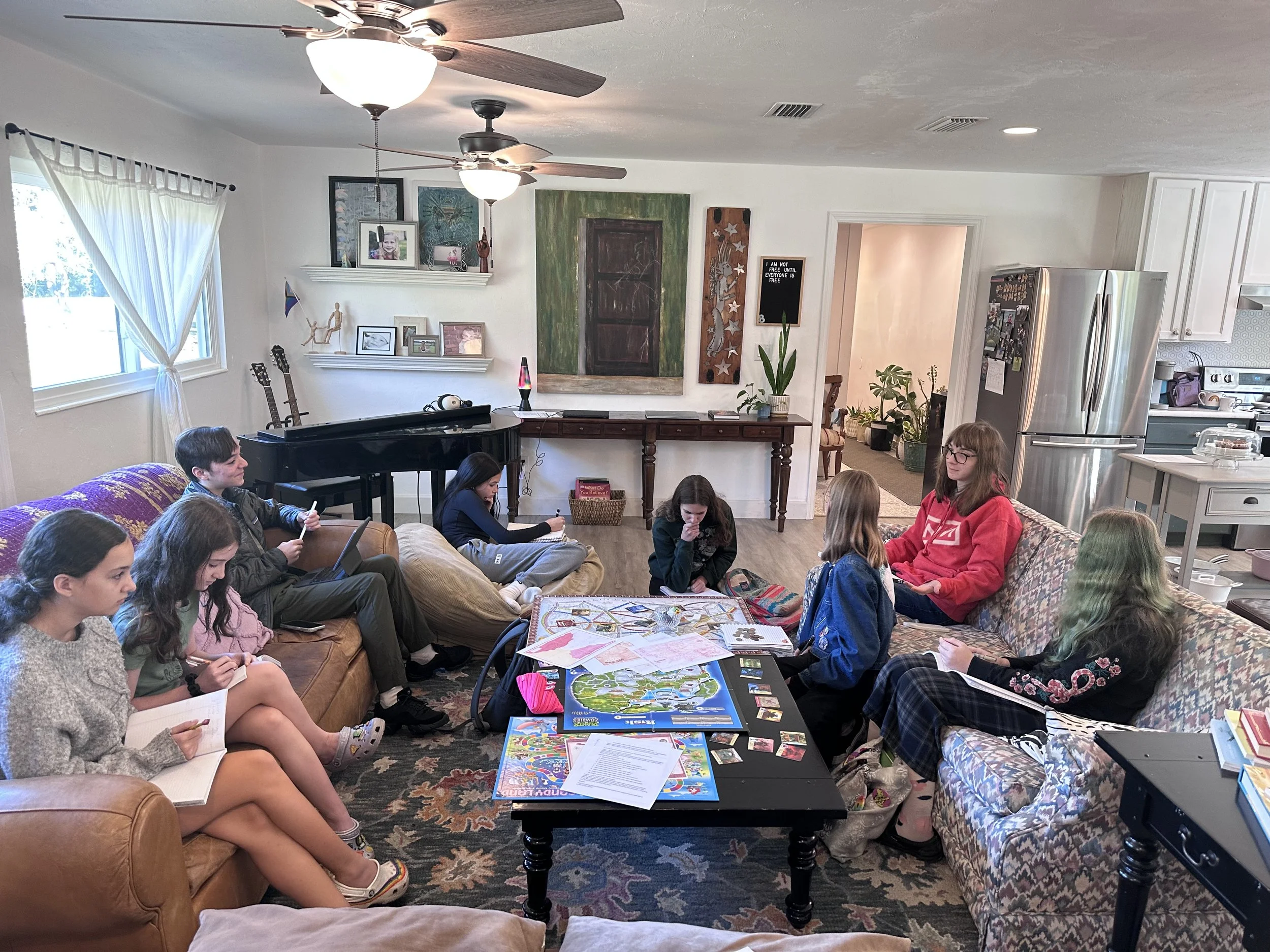
Encourage creative names and features that reveal story hints (e.g., “The Forgotten Road,” “Glass Harbor”). Write a 2–3 sentence description of one location.
4. Activity Part 2: Interview and Character Connection
Step 1 – Partner Interviews:
Students pair up and take turns interviewing each other using open-ended “getting to know you” questions. Each partner takes notes on what stands out — details, voice, quirks, humor, or imagery.
Interview Questions:
What’s your favorite place to be alone?
What’s a smell or sound that reminds you of childhood?
If you could live anywhere, real or imaginary, where would it be?
What’s something small that makes you feel brave?
When do you feel most at peace?
What kind of weather matches your mood today?
What’s one place you wish you could visit again?
What’s something most people wouldn’t notice about you?
If your life had a map, what landmark would mark a turning point?
What’s one rule or tradition you’d create if you ruled your own world?
Step 2 – From Real to Fiction:
Using one or two details from their partner’s responses as inspiration (not copying directly), students create a fictional character who might live somewhere on their map. They write a short paragraph or mini-profile about this new character — who they are, where they live, and what they want.
Prompt:
“Take something real you learned from your partner and imagine how it would sound or look in your world.”